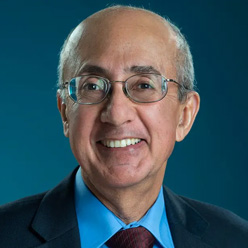
Rafiq Dossani

Senior Economist, RAND Corporation

Rafiq Dossani is a Senior Economist at the RAND Corporation, where he leads research on international development, technology policy, higher education systems, labor markets, and innovation-driven economic growth. With a distinguished career spanning academia, consulting, and public policy, he is widely recognized for his deep insights into global competitiveness and the evolving dynamics of the digital economy.

Previously, Rafiq served as Director of Stanford University’s South Asia Initiative, where he conducted foundational work on entrepreneurship ecosystems, financial sector reform, and technology-driven transformation in emerging markets. His extensive expertise also includes global security, AI and workforce readiness, and socioeconomic resilience for future generations.

Rafiq is a respected author and thought leader whose analyses frequently guide policymakers, industry leaders, and international institutions. His research has shaped dialogues on the future of higher education, global talent flows, innovation ecosystems, and the geopolitical implications of emerging technologies.

Major Achievements

  • Senior Economist at RAND, contributing to national and international policy research on education, technology, and economic development.
  • Former Director, Stanford South Asia Initiative, strengthening cross-border collaboration in research and innovation.
  • Extensive publications on global education systems, online learning, technology workforce development, economic reforms, and global competitiveness.
  • Advisor to governments and multinational organizations on education reform, technological adoption, and strategic economic planning.
  • Recognized thought leader on the future of work, digital transformation, and global talent mobility.
  • Contributor to RAND’s major studies on AI governance, resilience planning, national education strategies, and global labor market trends.

Key Expertise & Talking Points

  • The future of education and digital learning ecosystems
  • Global workforce development and talent shortages
  • Economic impacts of emerging technologies (AI, automation, digital platforms)
  • Higher education reform and skills alignment
  • Innovation ecosystems in the U.S., India, and other emerging markets
  • Public policy, national competitiveness, and long-term economic planning
  • Technology readiness and socio-economic resilience